THE REGISTRY LAYER FOR UNSTRUCTURED DATA

Ingest once.Query forever.

PDFs, scans, spreadsheets, emails. Talonic reads them once and returns typed, schema-validated rows with evidence. Every workflow, system, and agent queries the same database from then on.

Response within 1 business day · Or start free: 5,000 credits/mo, no credit card

registry connectedtalonic · query

Ask the document estate

counterpartyvaluerenewssource · confidence
Northern Utilities€1.24MSep 04p.12 · 0.96
Municipal Heat Ltd€640KSep 11p.08 · 0.94
East Industrial Park€2.08MSep 13p.21 · 0.97

3 rows · 0.38 s · every value traces to its source line

Illustrative query. On your corpus the answers come from your documents, extracted once and never re-read.

GETECPHOENIX PharmahandelBridgewayMaruti SuzukiWZBBosch Rexroth

live enterprise deployments · three continents

01 / production

From piles of documents to databases.

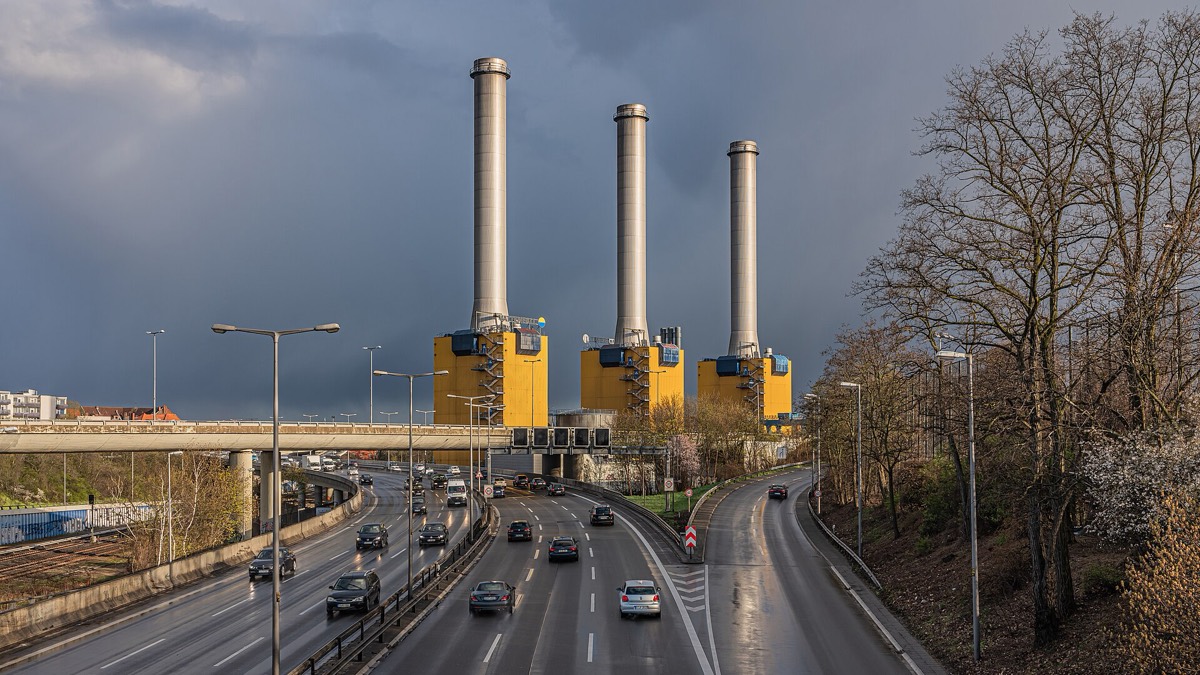
Three towers of a Berlin combined heat and power plant against a storm skycontract_value · illustrative01

GETEC

Energy · Germany

1M+

source observations, live tenant, 26 August 2026

The migration needed 75 fields per contract dataset. One read of the estate holds 1,042,665 source observations and 52,937 reusable concepts, live tenant, 26 August 2026.

Read the case study →
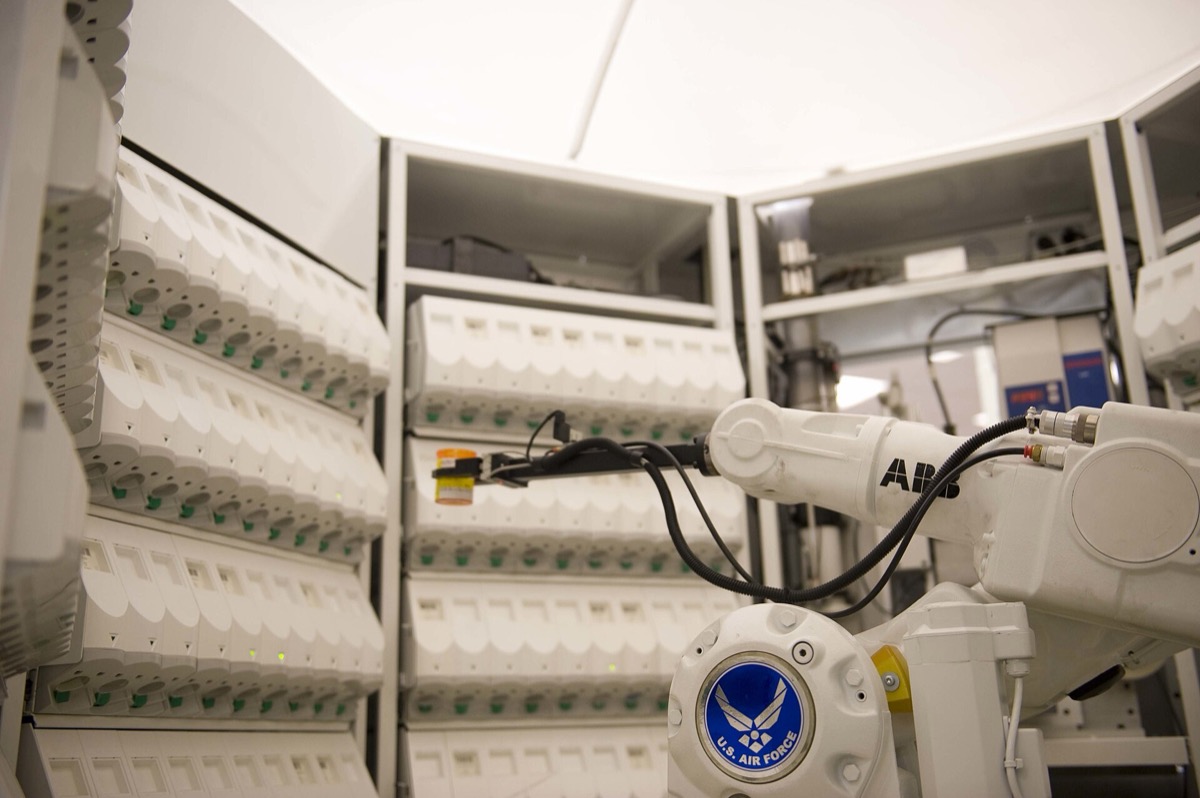
Robotic arm in an automated pharmacy dispensing system before a wall of medication cassettessupplier_name · illustrative02

PHOENIX Pharmahandel

Pharma · Germany

1,130

contracts delivered, one row each, Ivalua import-ready

Structured once, delivered in the shape Ivalua imports. No re-extraction between systems.

Read the case study →
Lone semi truck silhouetted against an interstate sunsetlane_rate · illustrative03

Bridgeway

Logistics · USA

96% vs 78%

same documents, same labels, same scoring

The same hand labelled documents, two fields, both systems scored the same way. Replacing a six figure incumbent.

Read the case study →
More document estates

Automotive, research, and industrial operations. Different document estates, the same governed registry.

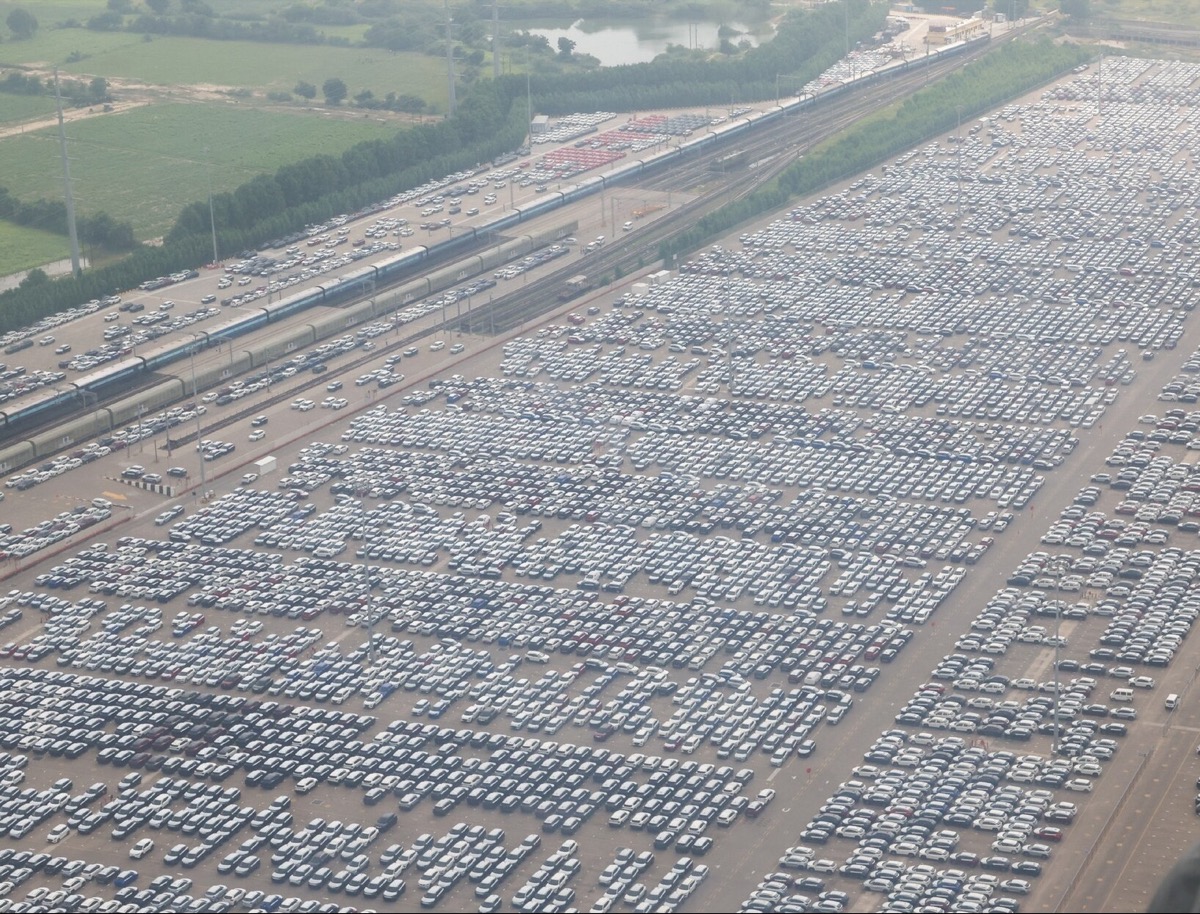
Aerial view of thousands of new cars in the Maruti Suzuki plant yard at Hansalpurmetric_value · illustrative

Maruti Suzuki

Automotive · India

Nineteen months of head office reporting from India’s largest automaker, resolved across 24 verticals into one queryable form with provenance to the page.

Read the case study →
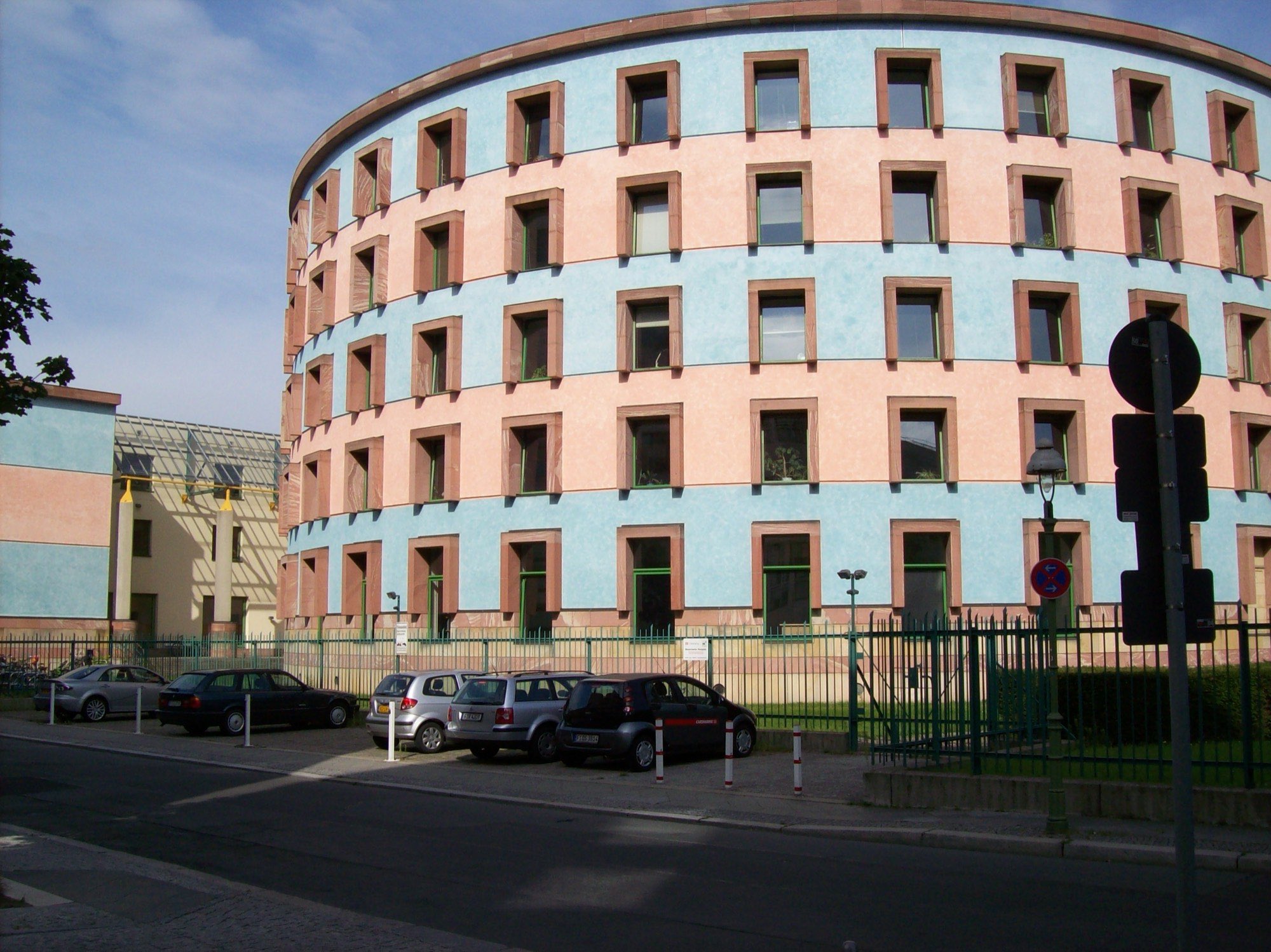
The curved pink and blue facade of the WZB building in Berlin, five storeys of square windows on a drumhours · illustrative

WZB

Research · Germany

German school timetable law from 1996 to 2021, transcribed exactly as printed. Every row carries its source page, a confidence score, and a note on anything ambiguous.

Read the case study →
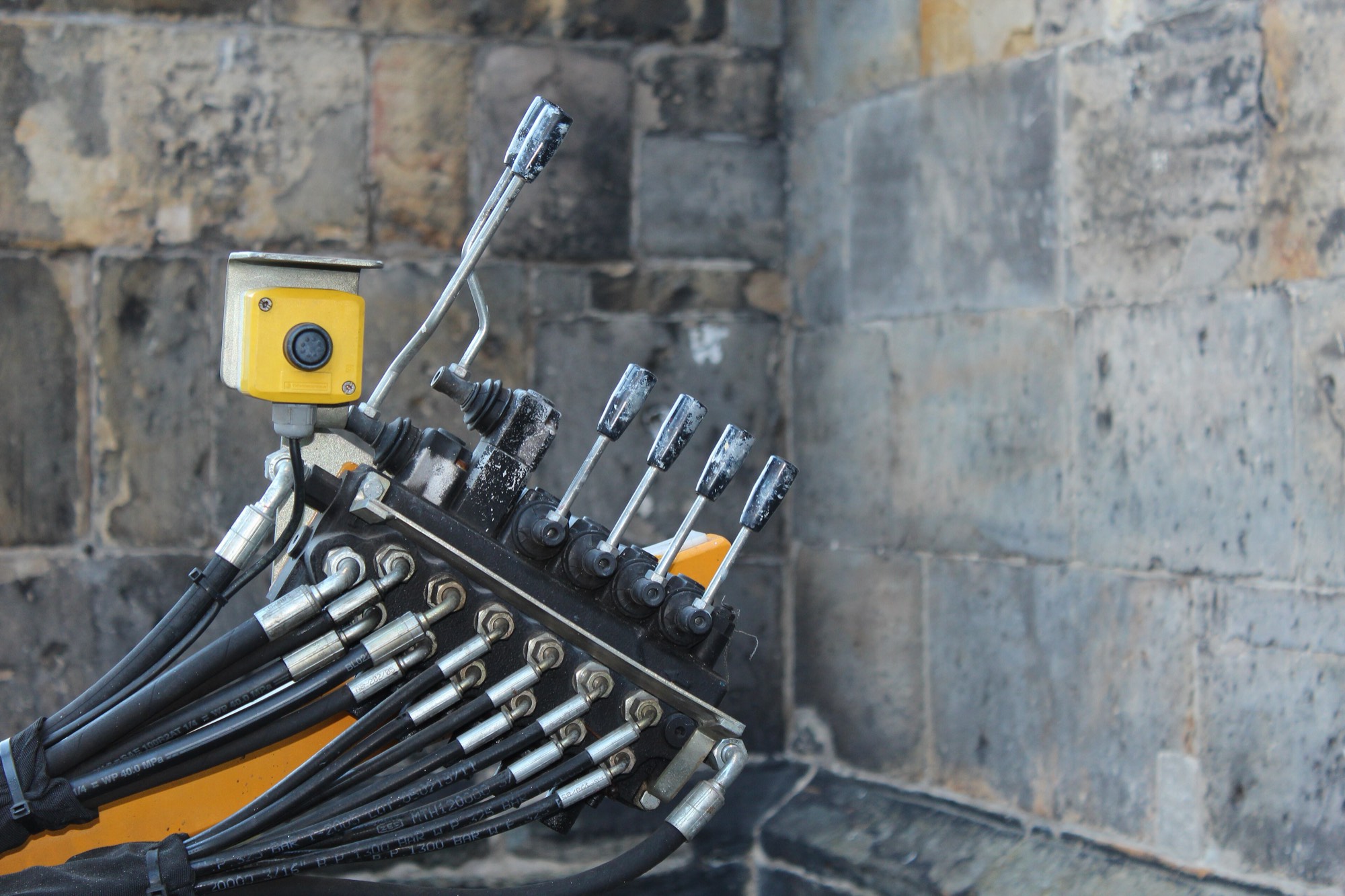
A bank of hydraulic control valves, spool levers above, hose fittings belowtolerance_band · illustrative

Bosch Rexroth

Industrial · Germany

Performance data existed only as printed curves, read into numbers. Every curve sampled to 100 points, with the reading conventions written onto the sheet.

Read the case study →

529 document types, zero templates · every number on this page names its measurement

02 / the false economy

Stop searching your documents.Query them.

Every RAG answer re-reads the same corpus and re-spends the same tokens. The cost scales with documents × systems × queries, and the answers still change between runs. A database is read once and queried forever.

01

Retrieval re-reads. Forever.

Every question re-extracts the same contracts, re-spends the same tokens, and can return a different answer than yesterday.

02

You can’t audit an embedding.

When the answer feeds an ERP entry or a filing, “the vector was close” isn’t provenance. Every Talonic value traces to the exact line, scan region, confidence, and reasoning.

03

The old fix is a six-month schema project.

Talonic resolved 529 document types with zero templates. Your documents already define the schema. The Schema Graph finds it.

03 / one pass

From document pile to database in three steps.

Point.

Any source: file shares, email, scans, RPA feeds, agent outputs. 25+ formats, four languages at production quality.

PDFs · scans · handwriting · spreadsheets · emails

Structure.

The Schema Graph finds the fields, entities, and relationships on its own. Canonical fields compound across every document you add; humans review only low-confidence values.

vendor_name · contract_value · governing_law

Query.

SQL, natural language, REST, or straight into your agents over MCP. Ask once, and the answer comes from the registry, not a re-read of the corpus.

WHERE auto_renew = true AND notice_period_d < 30
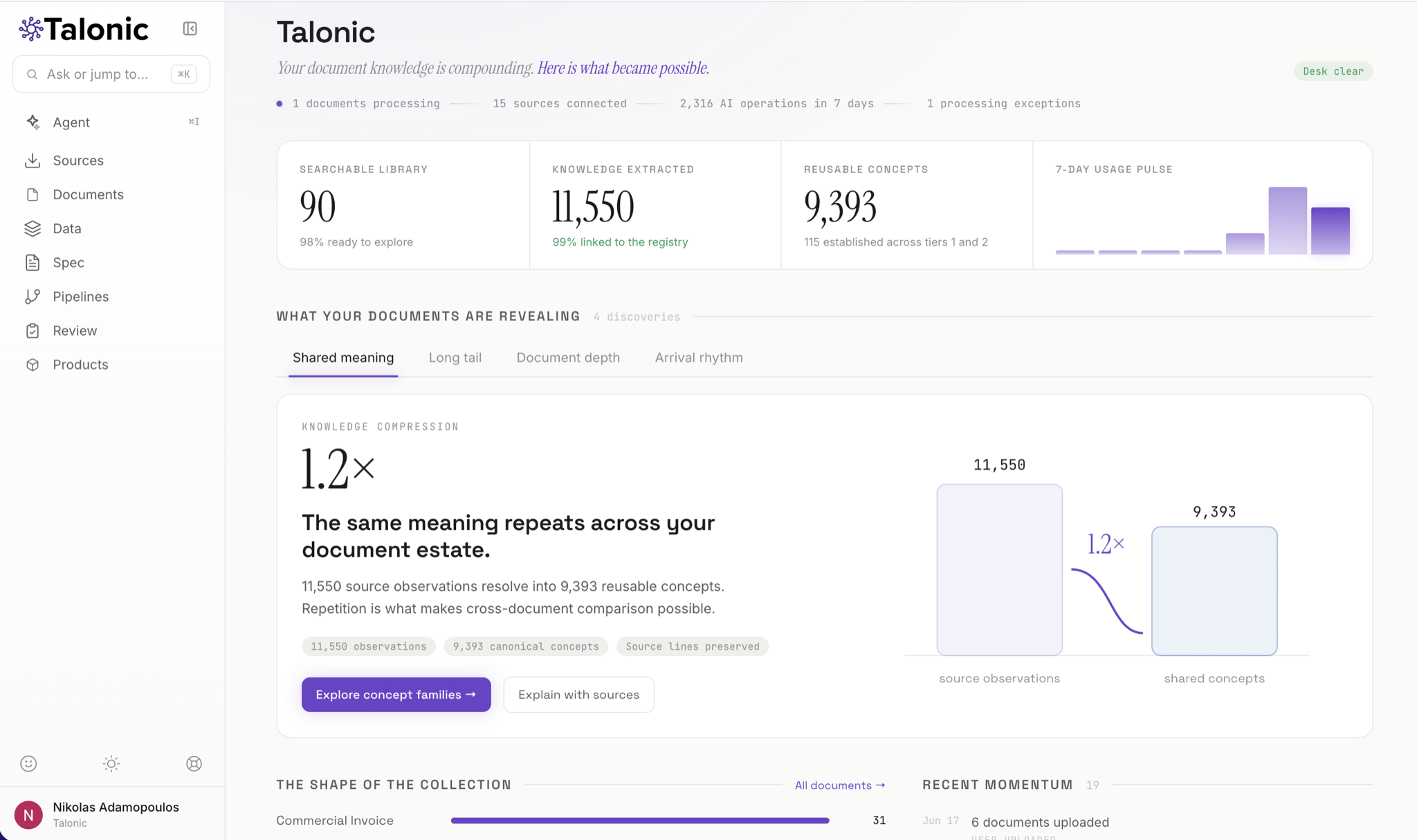
registry / liveobservations → reusable concepts
Talonic dashboard: searchable document library with extracted fields resolving into reusable concepts
The registry, live. Illustrative capture, not a customer tenant.source lines preserved

04 / put it to work

Your data is ready. Now use it.

SPECS + PIPELINES

Define the Spec. The Pipeline does the rest.

A Spec describes exactly what a downstream system needs: the fields, the shape, the format. Pipelines deliver it automatically into Dynamics, Ivalua, Salesforce, or any REST endpoint. Every delivery is signed, retried, and audit-logged. The workflows you used to script with RPA run on AI instead.

AGENTS · MCP

Or let an agent set it up.

Everything above is available over MCP. An agent can create the Spec, wire the Pipeline, and watch the deliveries. Your team describes the outcome and the agent configures Talonic.

Connect via MCPnpx -y @talonic/mcp@latest

05 / receipts

Three claims. Three public benchmarks.

Same corpus. Side by side. Run it yourself.

01
ACCURACY

Talonic vs RAG

Same 53 SEC filings, same model, 39 questions that need every document at once. Talonic answered 23 of 24 ranking questions. Hybrid RAG answered 3.

Read the benchmark →
02
COST

Cost per 1,000 queries

Retrieval pays on every question, forever. Structuring pays once: $10.14 to read 53 documents, then $0.00 per 1,000 questions on the structured path.

Read the benchmark →
03
CONSISTENCY

Same questions, ten runs

Ask the same question ten times. Hybrid RAG gives the same answer all ten times on 2 of 39 questions. Talonic does it on all 39, byte for byte, across 390 turns.

Read the benchmark →

Co-author of DIN SPEC 91491, Europe’s first AI data standard · with Fraunhofer IIS · GDPR · HIPAA · ISO 27001 / 42001 aligned · EU-resident infrastructure · Germany West Central

Test Talonic on your documents →

Your agents can use it today.

REST API, Node SDK, or MCP server. Every response carries typed fields, confidence, and provenance, so your agent knows when not to trust an answer. Free tier: 5,000 credits a month, no credit card.

06 / your documents

Send us a pile of files. We’ll send back a database.

Send a representative sample of contracts, scans, case files, or operational documents. We run them through Talonic and send back your extracted data within five business days: field-level coverage, confidence, and provenance. If the database doesn’t beat what you have, you’ll know exactly why, field by field.

Document testresponse within 1 business day · your data back within 5

Response within 1 business day.

Every company we walk into is sitting on the same two things: decades of documents nobody can query, and an AI budget being spent re-reading them. We think that’s backwards. Your documents already contain a database. Someone just has to find it once, prove every value, and keep it current. That’s the entire company.

So we won’t pitch you with adjectives. Send us your ugliest pile of files: the scans, the handwriting, the folder nobody opens. Then judge the output field by field.

Nikolas Adamopoulos & Holger Nordsiek · Founders, Talonic

Photography: A.Savin (FAL) · U.S. Air Force, public domain · Marcin Wichary (CC BY 2.0) · Prime Minister’s Office, India (GODL) · Coenen (CC BY-SA 3.0) · Kleuske (CC BY-SA 3.0)